


Number of hours
in a month

Number of hours
the average patient spends with fully-trained medical professionals

Number of hours
the patient spends with their
un-trained family caregiver
There are 53 Million Caregivers in the U.S.
The Impact of Caregiving
Caregivers spend an average of 32 hours a week caring for their loved ones.
In most states, working 30 hours a week constitutes full-time employment status.
Caregiving is a full-time job!
Who are the experts in care?
The medical care facilities and medical care professionals are the experts in care.
We know that you want what’s best for your patients.
We also know that you have little to no control over their care at home.
That changes NOW!
It’s time for the experts to start guiding the caregiver as part of the patient’s treatment plan.
Our Guides
Action Plan
Self-Care
Hospital Stays
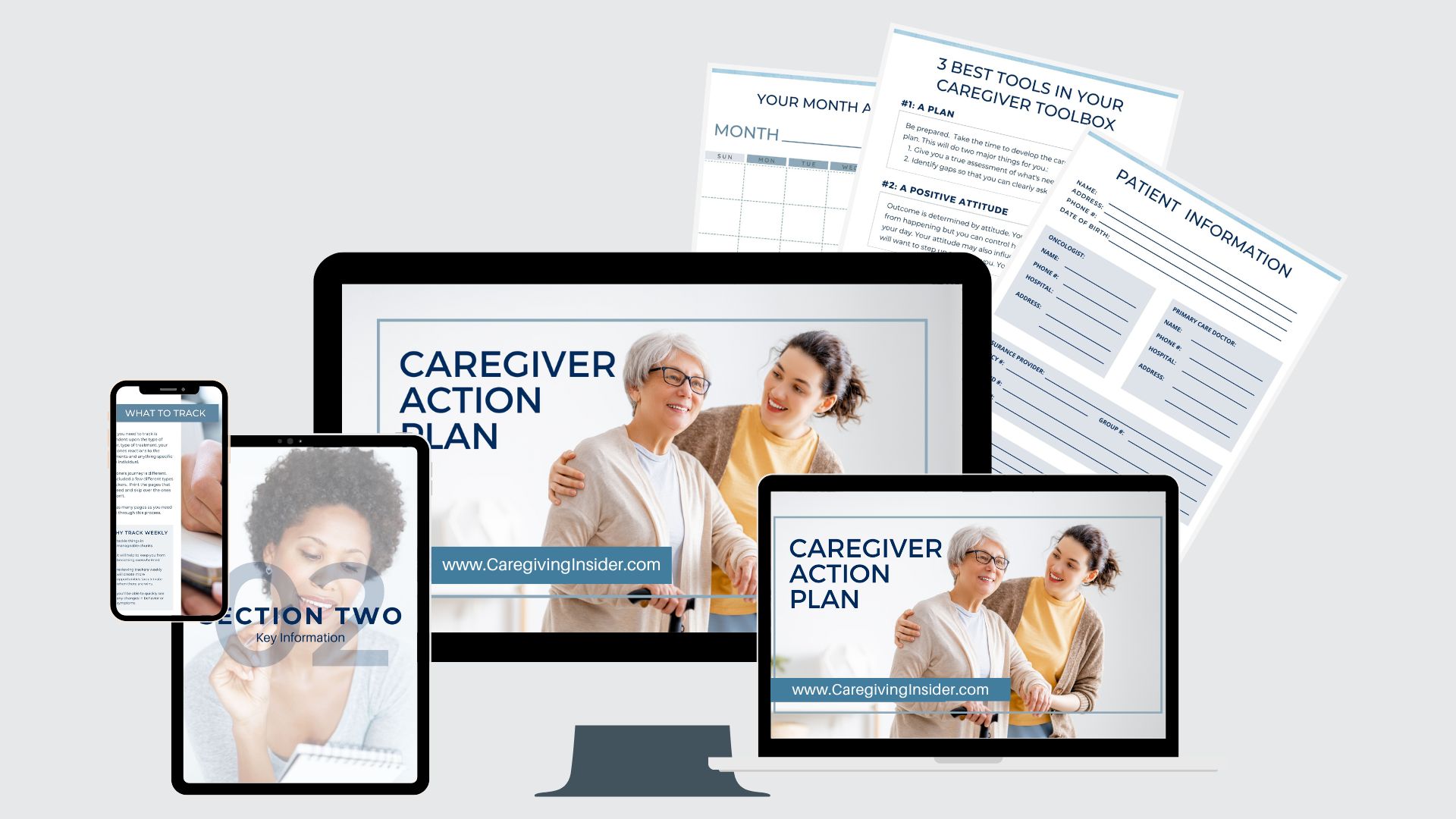
Planning for caregiving is unique to the patient, the caregiver, their household, their finances, the proximity to care and resources and so much more.
No one can give a caregiver a full-proof step-by-step guide to caring for a loved one.
You can, however, give them the tools to build a plan that is right for them.
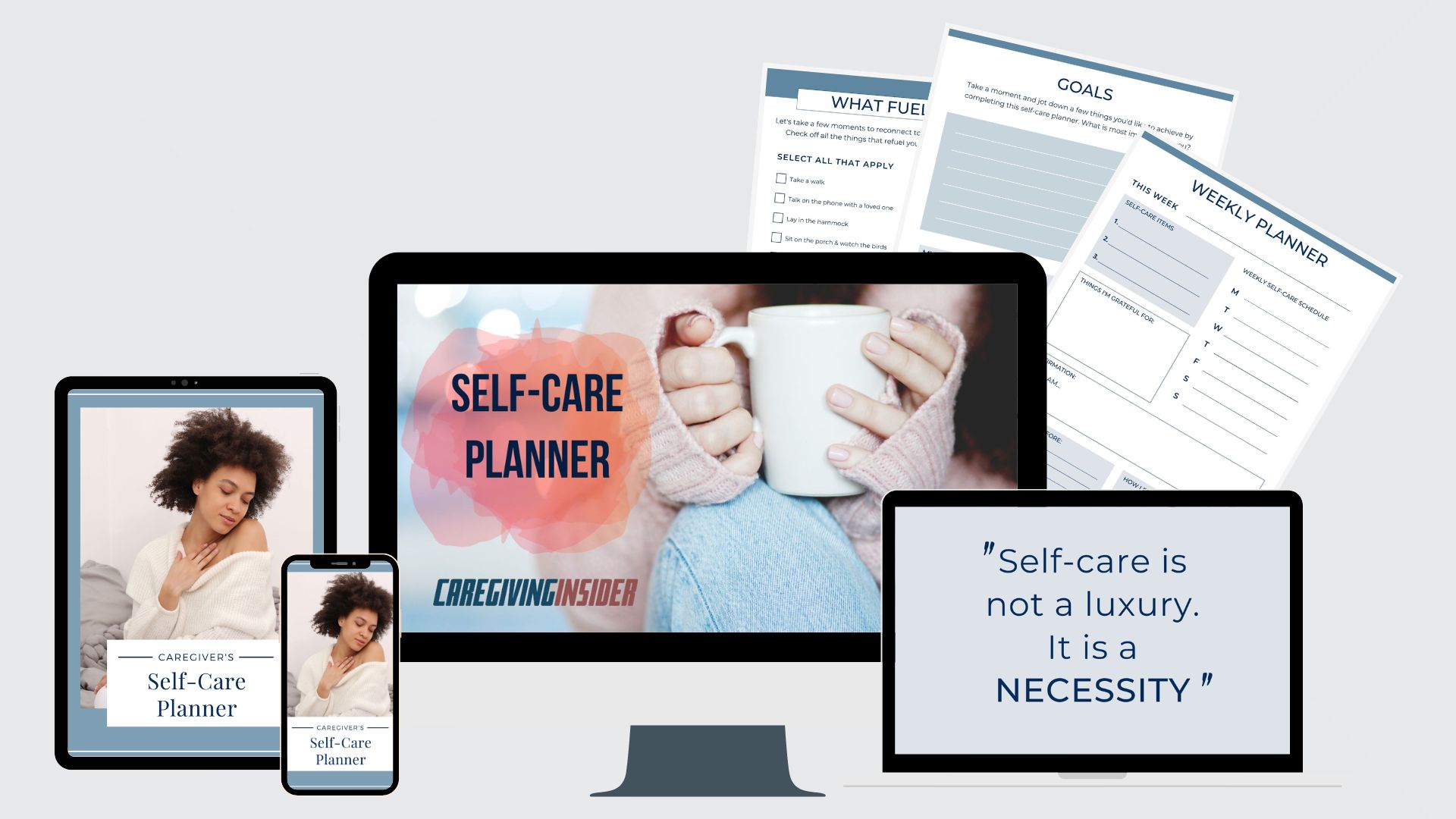
The physical, mental and emotional health of the caregiver has the greatest impact on the health of the paitent as well as everyone living in their household.
Providing a planner to aid in their personal health during the care of their loved one could greatly the caregiver’s health and their ability to properly care for their loved one.
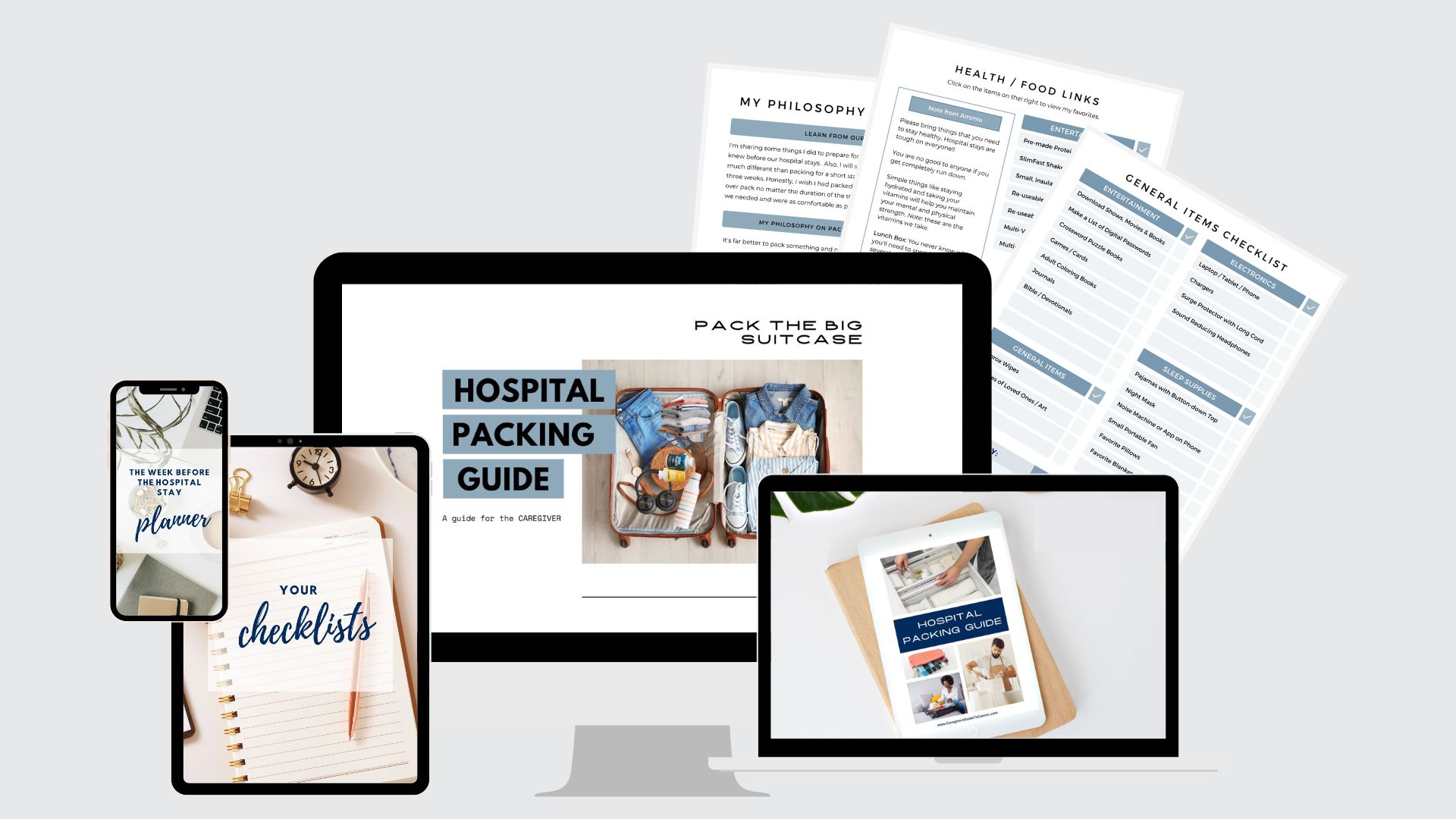
Most people pack lightly thinking that their hospital stay is short-term and they can endure or do without for a short period of time.
The duration of the stay should not impact how a caregiver packs for the stay.
We encourage people to pack more than they’d think necessary, due in large part to the mental and emotional health that comfort items provide.
Why White Label Vs. Developing In-House

# of Guides to Choose From
Caregiver Action Plan – Great Starting Point
Hospital Packing Guide – Needed for every Hospital
Self-care Planner – Preventative care strategy

Developed by a Caregiver
These guides were developed by our founder, a caregiver to a stage 4 cancer survivor. They stemmed from all the things she wished someone told her when she became a caregiver.

Reduced Production Time
The research, formatting, product development and branding is done for you. You simply add your logo and any facility specific information regarding in-house support services.

Cost Savings on Development
You’re already doing more with less staff. They don’t have the time to develop new resource materials. Contracting out takes months and the development still requires a lot of input from your team.

Add Guides as Needed
We recommend that every facility start with the Caregiver Action Plan. You can add more guides as your facility’s and your patients’ needs evolve. If your facility needs a guide that we don’t have, we may invest in developing it.

Increase Patient Support
Whether a patient is dealing with a short-term emergency or a life-long diagnosis, their overall health is greatly impacted by their home environment and what kind of support they have outside of the medical center.
When you support a caregiver, you increase your patients’ odds of quality care.
Our guides help the caregiver understand their new role immediately and include tools to help them develop a customized plan for the success of every member of their household.
Each guide is comprehensive and easy to follow.
They include worksheets, trackers and checklists so that they can create a consolidated source for their loved one’s care. This not only helps them run their household more effectively but more accurately allows them to relay vital information back to the medical care team.
Each guide can be tailored to include policies and procedures that are specific to your facility and/or specific to a diagnosis.
How it Works
The Design: We design the materials with your logo and your facility information to included. It is branded for YOU. Initial pages have space to input your mission as well as general information about their diagnosis/illness (if illness specific guides are required).
Add On As Needed: We use our guides as a baseline for a more comprehensive information guide for your facility. We can include sections for guidance you share with every patient like suggested physical therapy exercises, nutritional guidance, basic triage steps, etc.
The Digital Guides: We deliver digital versions of the guides to be placed on the facility’s website and/or emailed to the caregiver.
The Printed Guides: We print all guides in a bound workbook and ship them directly to your facility. Re-ordering is easy.